Introduction
A container farm is exactly what the name promises: a complete agricultural production unit built inside a standard shipping container. Drop one on a warehouse floor, a parking lot, a rooftop, or a desert lot, connect power and water, and within days it can be growing food. No soil, no sunlight, no arable land, and no dependence on the weather outside.
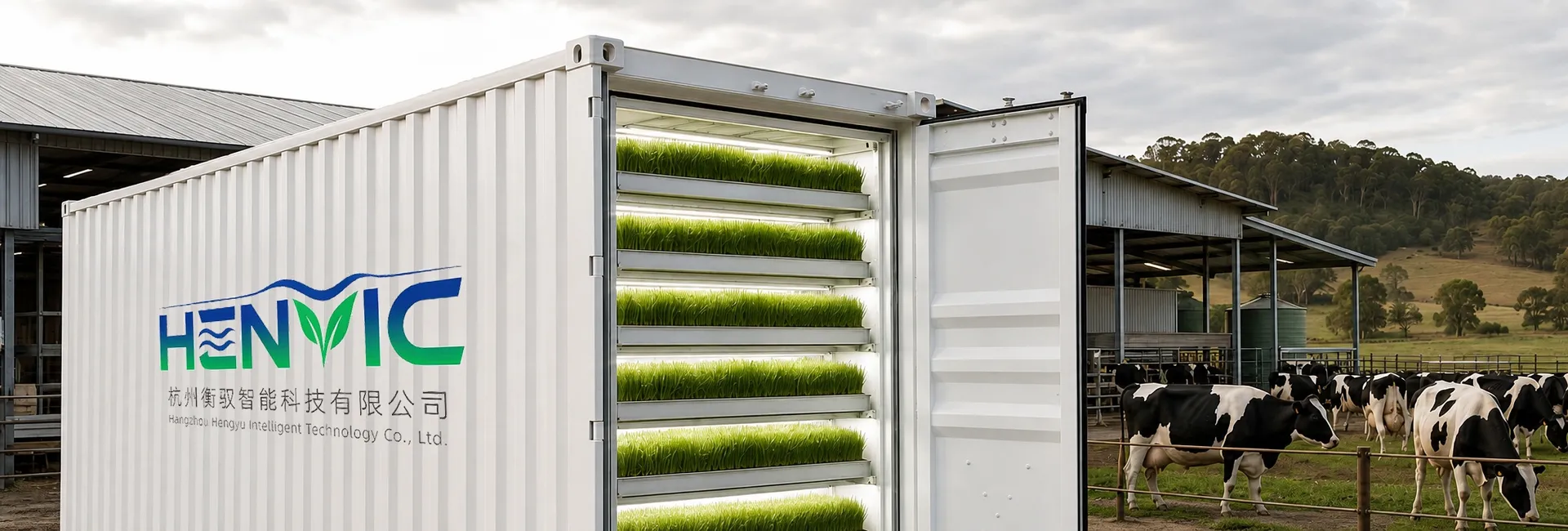
The idea is deceptively simple. A used 40-foot ISO container — roughly 12 meters long and 2.4 meters wide — offers about 30 square meters of floor area. Seal it, insulate it, fit it with vertical racks, LED lights, hydroponic plumbing, and climate-control hardware, and that small metal box becomes a controllable ecosystem. Stack the racks four or five tiers high and the same footprint presents a thousand or more square feet of actual growing surface.
This article explains the concept as a whole: what fits inside the box, how the subsystems work together, which crops suit the model, and what determines whether a container farm makes money.
What Fits Inside the Box
Every container farm, regardless of crop, is assembled from the same six subsystems.
The envelope. A standard ISO container, insulated with 50–100 mm of polyurethane or similar foam and sealed against air, light, and pests. Since the box is closed, many operations run entirely pesticide-free. Electrical panels, water lines, drains, and data connections are routed through sealed penetrations.
Vertical growing structures. Racking turns flat floor space into a three-dimensional production volume. This is the single most important design choice, because it multiplies yield per square foot of real estate several times over. Racks are typically built from aluminum or galvanized steel with food-grade trays or channels.
Hydroponic or aeroponic root systems. Plants grow in nutrient solution rather than soil, through nutrient film technique (NFT), deep water culture (DWC), ebb-and-flow, or aeroponic misting. Recirculating water recovers almost everything the plants do not consume, which is why container farms use 90–95 % less water than field agriculture.
LED lighting. With no sun inside, light becomes an engineered input. Horticultural LEDs deliver a tuned spectrum — mostly red and blue, with small amounts of far-red and green — at intensities and photoperiods matched to each crop. Modern fixtures reach 2.5–3.5 µmol/J, and they are the largest electrical load in most systems.
Climate control. Heating, cooling, dehumidification, ventilation, and CO₂ enrichment keep temperature, humidity, vapor pressure deficit (VPD), and carbon dioxide within tight bands. Because the volume is sealed, conditions are fully reproducible — the same recipe produces the same crop in Alaska or Singapore.
The digital control layer. Sensors for temperature, humidity, CO₂, EC, pH, and light feed controllers that schedule lighting, fertigation, and climate automatically, with remote dashboards and alerts. This is what makes the box reliable rather than merely clever.
What Grows Well Inside the Box
Not every crop belongs in a container. The model favors plants that are compact, fast-cycling, high-value, and undemanding in height.
Leafy greens and herbs are the flagship category: lettuce, kale, arugula, spinach, basil, pak choi, Swiss chard, and microgreens. Lettuce reaches harvest in 28–35 days, allowing 10–12 turns a year, and commands premium prices when sold fresh and local.
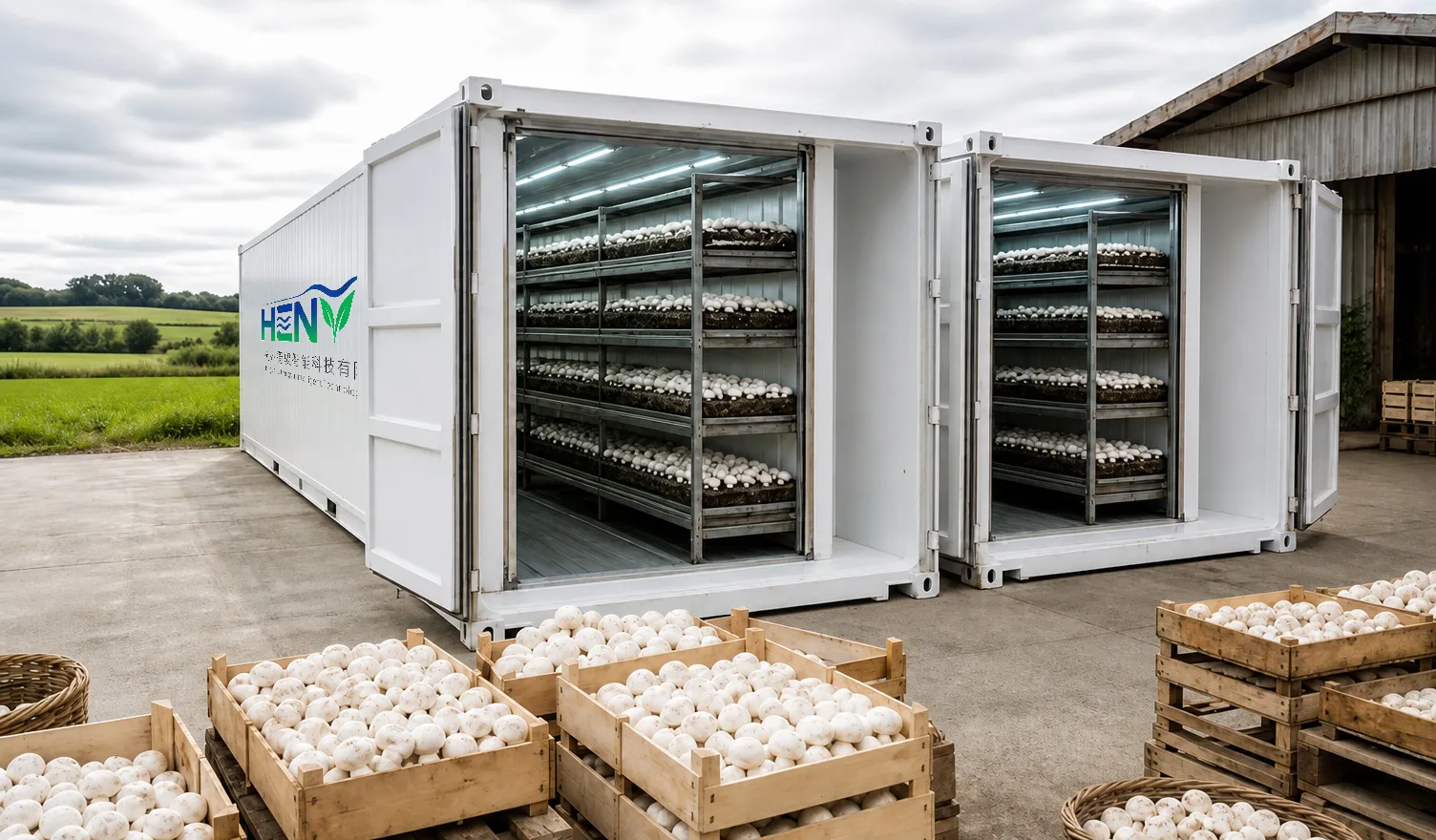
Mushrooms are the fastest-growing branch of container farming. Fungi need no light for energy — only a brief morphological signal — and depend entirely on controlled temperature, humidity, CO₂, and fresh-air exchange. Oyster, lion's mane, shiitake, and king oyster mushrooms all suit the sealed-chamber model, and their high value per kilogram makes a single container economically meaningful.
Specialty and high-value crops fill out the roster: strawberries, micro-herbs, edible flowers, baby vegetables, and certain medicinal or culinary plants. What these share is a premium price and a preference for consistency over volume.
The crops that generally do not fit are commodity staples — wheat, corn, rice, potatoes — where field agriculture's scale simply cannot be matched inside a metal box.
How the Whole System Works Together
The elegance of a container farm lies in how tightly the subsystems interlock.
Light drives photosynthesis and transpiration. Transpiration loads the air with moisture, which the climate system must remove to hold VPD in range. Ventilation removes that moisture and manages CO₂, but also dumps cooled air, so ventilation and refrigeration must be balanced continuously rather than switched on and off. Nutrient dosing responds to EC and pH probes, which drift as plants take up water faster than nutrients. Every adjustment in one variable ripples into the others.
This is why container farming is fundamentally a control problem, not a growing problem. The biology is well understood; the challenge is holding dozens of interacting variables inside narrow, crop-specific windows while keeping energy consumption tolerable.
Why Geography Stops Mattering
The most striking feature of the container model is that it decouples food production from geography.
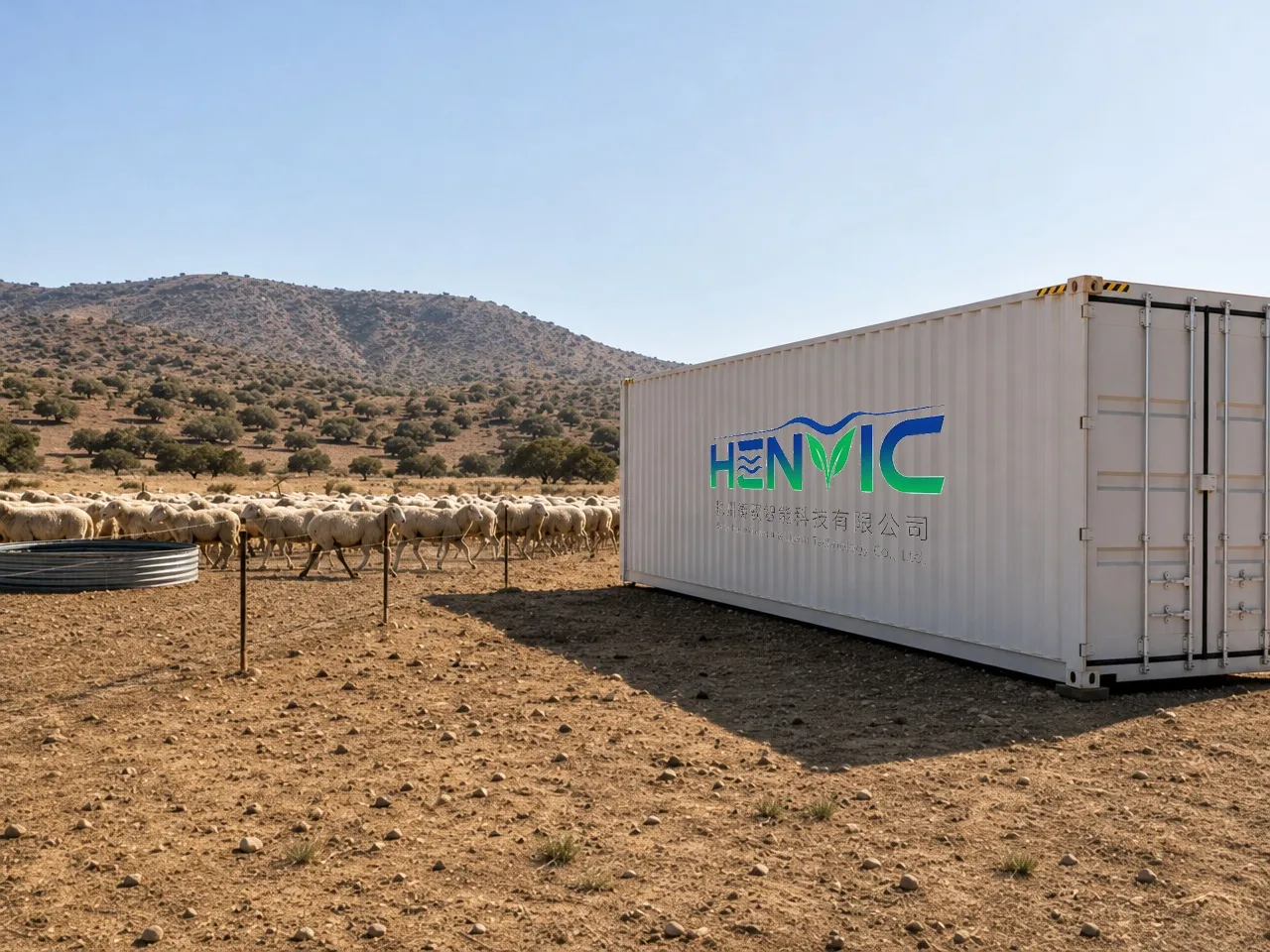
A container farm can sit inside a city, on a brownfield site, at a port, in a refugee camp, on a research station, or in a desert. It can run through winter at high latitude and through monsoon season in the tropics. It can be shipped, stacked, expanded one unit at a time, and relocated if lease or market conditions change.
For regions with poor soil, scarce water, harsh climate, or long food supply chains, that portability is not a gimmick — it is the core value proposition. Food can be grown at the point of consumption, harvested the same day, and sold without a cold chain stretching hundreds of kilometers.
The Economics: Where the Business Case Lives
Container farms are technically proven. Whether any given unit is profitable depends on five economic levers.
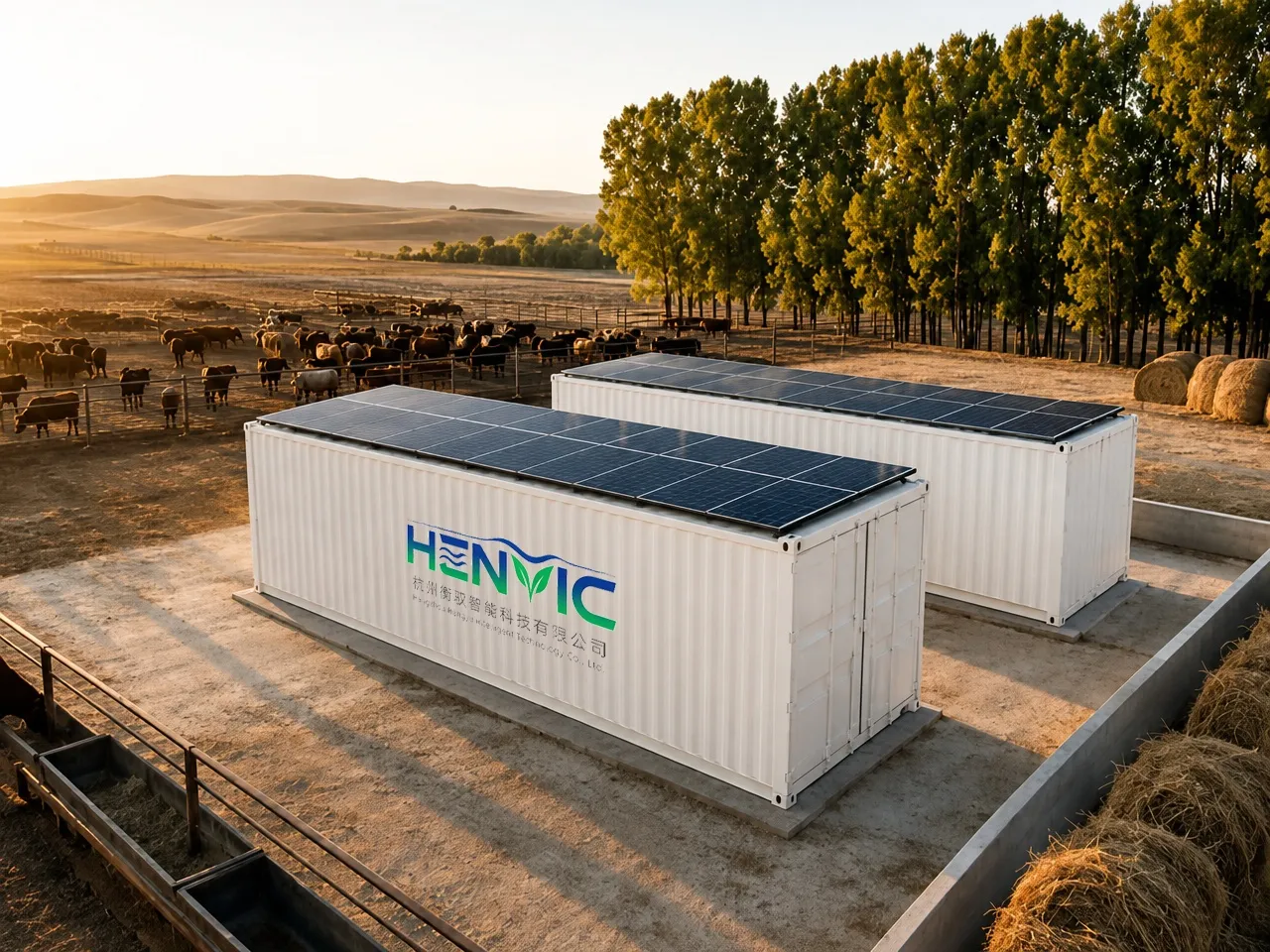
Energy cost. Lighting, cooling, and dehumidification together can consume 60–80 % of operating expenses, and a container may draw 30–60 kW continuously. Siting on a low-tariff grid, or pairing the unit with solar, becomes a decisive advantage.
Capital cost. A turnkey system ranges from roughly
200,000 for a fully automated, multi-zone unit with robotics and cleanroom inoculation.
Yield and price. A container produces a modest absolute volume — often several hundred to a few thousand kilograms a month — but in a category where fresh, local, pesticide-free produce earns a premium. Competing with field-grown commodities on price is not the game.
Labor. Automation is what makes the numbers work. Seeding, transplanting, climate management, and to some degree harvesting can be mechanized or software-scheduled, collapsing labor per kilogram.
Utilization. An idle container earns nothing. Success depends on keeping harvest cycles back-to-back and matching production to actual demand.
Sustainability and the Circular Economy
Container farming's environmental story is genuinely strong on several axes: near-total water recirculation, zero soil erosion and minimal runoff, no agricultural pesticide drift, and dramatically shortened food miles.
Its main footprint is electricity. Beyond energy, the model integrates well with circular systems. Mushroom operations consume agricultural and forestry residues — sawdust, straw, coffee chaff, spent grain — and return spent substrate as compost, animal feed, or biogas feedstock. Leafy green operations can be powered by rooftop solar and cooled with recovered heat.
Conclusion
Container farming is the shipping container's second act. The same standardized steel box that reshaped global logistics now serves as a modular, reproducible food factory — a whole garden compressed into twelve meters of insulated steel. Its strengths are consistency, portability, and control: the same clean, fresh produce grown 365 days a year, anywhere, independent of soil, season, or climate.
Its disciplines are energy management, contamination control, and unit economics. The technology is mature enough to deploy today; the businesses that succeed are the ones that treat the container not as a novelty but as a precision instrument — and run it accordingly.