Abstract
Shiitake (Lentinus edodes) is one of the most widely cultivated and commercially valuable edible mushrooms globally. Traditional cultivation relies on seasonal, climate-dependent methods, which are susceptible to biological contamination and yield instability. To address these challenges, containerized farming technology has emerged as a transformative approach. By integrating Controlled Environment Agriculture (CEA) principles within repurposed freight containers, cultivators can achieve precise regulation of microclimates, safeguard against pathogens, and maximize spatial efficiency. This article provides an in-depth technical analysis of containerized Shiitake cultivation, detailing the system design, cultivation workflow, and the profound economic and environmental advantages it offers, positioning it as a cornerstone for the modernization of mushroom production.
Keywords:Shiitake; Containerized Farming; Mycelium; Environmental Control; Precision Cultivation; Sustainable Agriculture
1. Introduction
Shiitake mushrooms, commercially known as Lentinus edodes, are prized globally for their rich, umami flavor, exceptional texture, and substantial nutritional profile, including high levels of ergothioneine, lentinan, and essential vitamins[1]. Historically, Shiitake has been cultivated on wood logs in forest environments or in open, climate-dependent greenhouses. While these methods are established, they are fundamentally limited by weather variability, pest infestations, and the threat of contaminants, leading to inconsistent yields and varying quality[2].
Containerized cultivation technology represents a paradigm shift in fungal agriculture. By converting standard shipping containers into highly controlled biological reactors, farmers can transform mushroom production into a continuous, industrialized, and predictable process. This paper explores the biological foundations of Shiitake growth and demonstrates how container systems address the inherent limitations of traditional methods to achieve superior productivity and food safety.
2. Biological Foundations of Shiitake Cultivation
Unlike obligate mycorrhizal mushrooms such as matsutake, Shiitake is a saprophytic fungus. This biological characteristic means it derives nutrients by decomposing dead organic matter, making it highly adaptable to controlled substrate formulations[3].
2.1. The Growth Cycle
The Shiitake life cycle consists of several critical stages: the colonization of the substrate by the mycelium (the vegetative, thread-like network) and the fruiting stage, where the edible mushrooms (fruiting bodies) emerge[4]. Each stage demands distinct environmental parameters.
2.2. Environmental Triggers
For optimal fruiting, Shiitake requires specific environmental cues. Temperature, humidity, light, and ventilation are the four pillars of cultivation. The mycelium prefers a stable, warm, and dark environment for rapid colonization, whereas the fruiting stage demands cooler temperatures, high humidity, and the introduction of diffused light to stimulate cap formation[5].
2.3. Contamination Vulnerability
Because Shiitake substrates (typically hardwood sawdust supplemented with nutrients) are rich in organic matter, they act as ideal growth media for competing molds and bacteria, most notably Trichoderma species[6]. Efficient cultivation demands an environment that minimizes these biological threats.
3. Design and Dimensional Engineering of the Container System
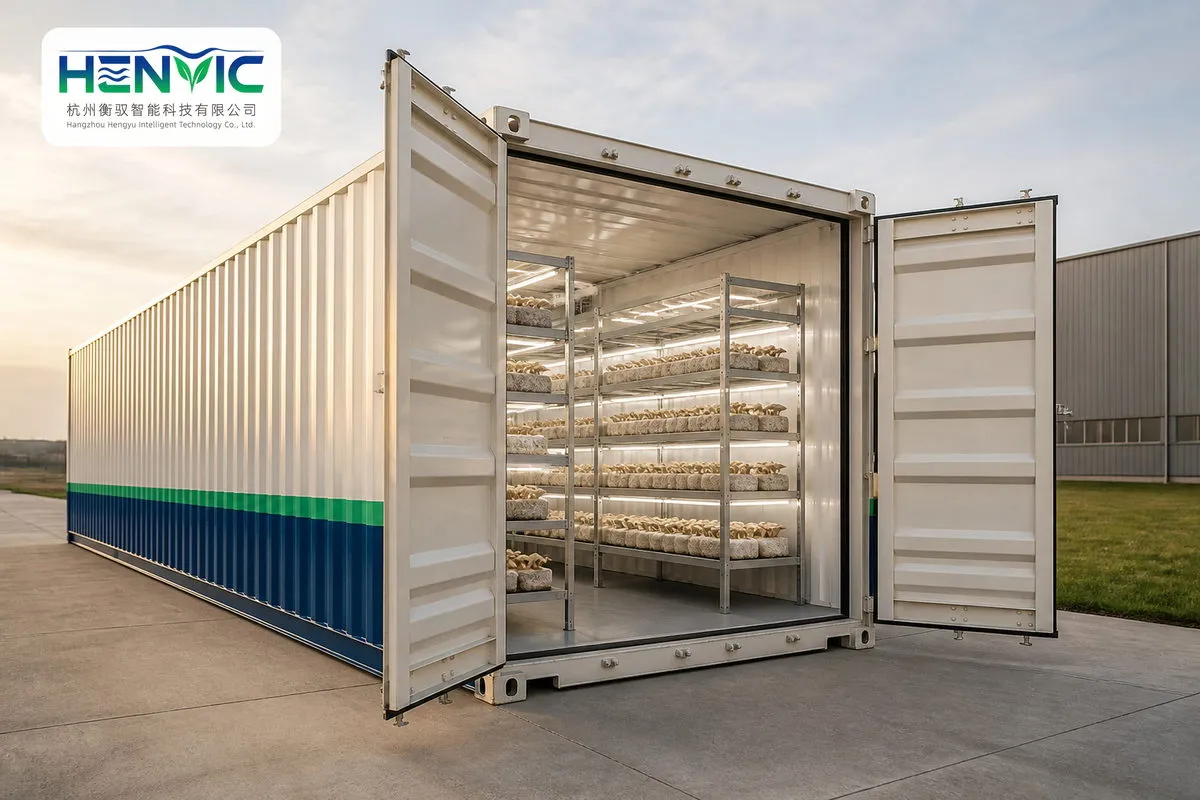
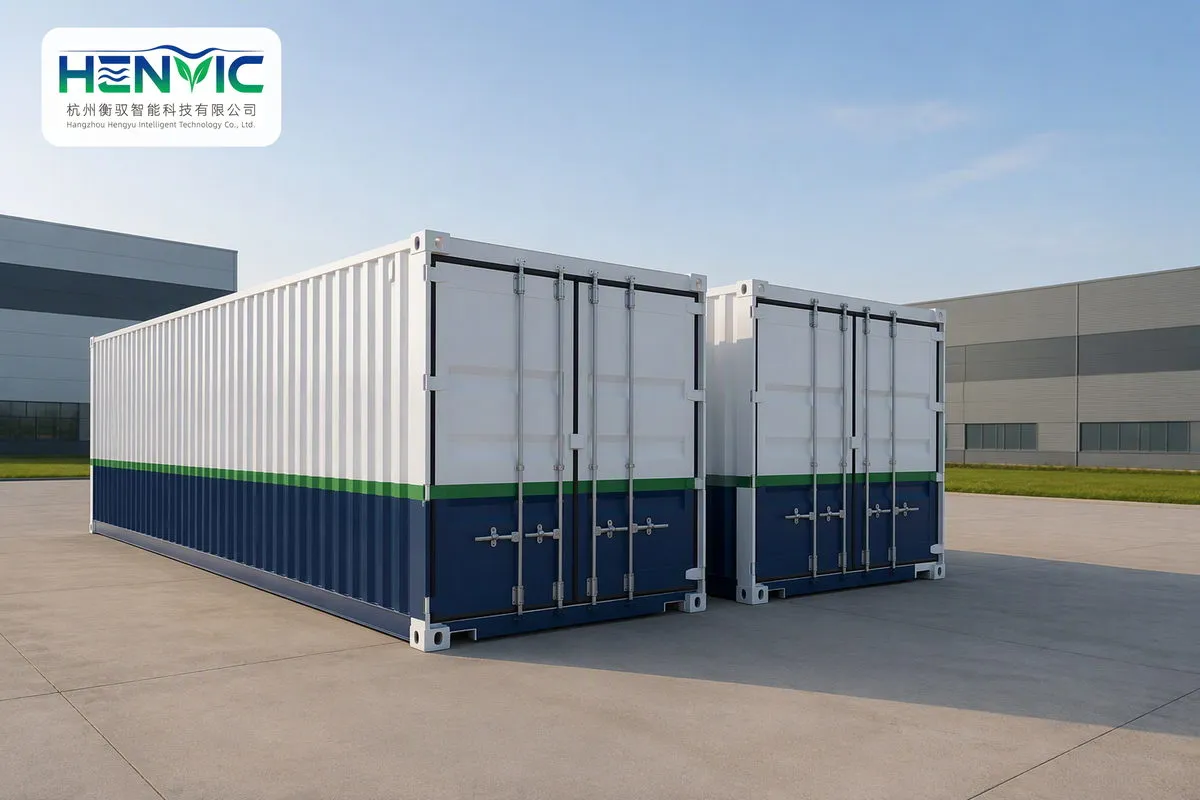
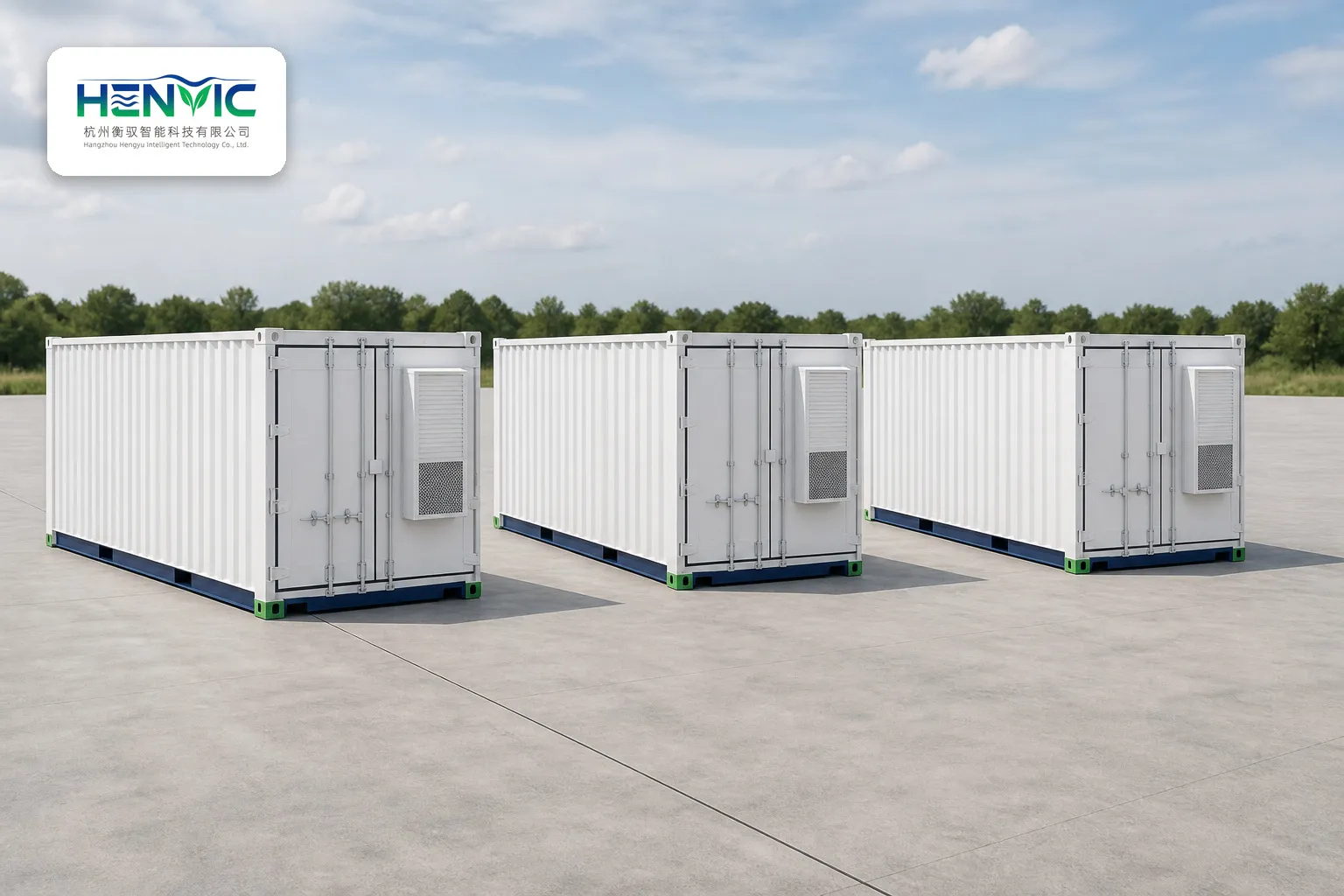
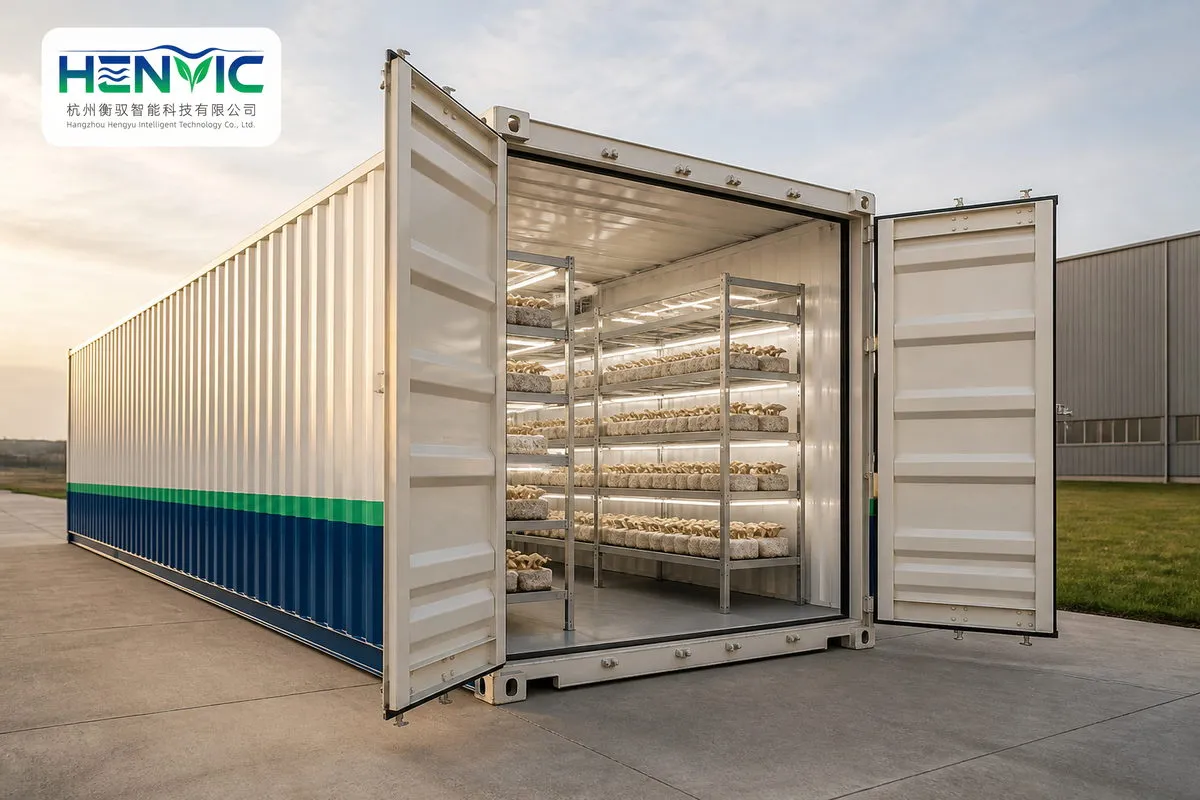
The containerized Shiitake farm utilizes standard 20-foot or 40-foot shipping containers re-engineered as sealed, sterile cultivation chambers. The design prioritizes environmental insulation, spatial efficiency, and precise automation.
3.1. Structural Retrofitting
To achieve high performance, the container is lined with a durable, antimicrobial, and waterproof interior coating. High-density polyurethane foam is applied to the walls and roof for superior thermal insulation, drastically reducing the energy required to maintain specific temperatures against external climate fluctuations[7].
3.2. Vertical Racking System
Maximizing spatial utilization is a core tenet of container farming. Interior shelving is fabricated from corrosion-resistant, food-grade materials, typically stainless steel or specialized polymers. A multi-tiered vertical racking system is installed to accommodate hundreds of standardized Shiitake growing bags or blocks, effectively multiplying the yield per square meter of ground space[8].
3.3. Airflow Architecture
Proper ventilation is critical for mycelial respiration and preventing gas buildup during fruiting. The system incorporates an optimized ductwork network combined with high-efficiency circulatory fans. This design ensures uniform air distribution, eliminating dead zones and maintaining a consistent microclimate across every layer of the rack[9].
4. Core Technological Modules for Microclimate Control
The operational success of containerized Shiitake generation is driven by integrated technological modules that automate environmental management.
4.1. HVAC and Climate Regulation
The core of the container is a high-precision HVAC (Heating, Ventilation, and Air Conditioning) array. This module manages temperature and CO2 levels automatically. During the fruiting phase, when mushrooms release significant amounts of CO2, the system increases fresh air intake to prevent "stem blowing"—a condition that results in elongated, thin stems and degraded commercial value[10].
4.2. High-Volume Humidification System
Shiitake fruiting bodies require a relative humidity (RH) of 80% to 95% to develop properly. An automated atomization or misting system, managed by hygroscopic sensors, delivers precise moisture levels. This prevents substrate drying while avoiding over-saturation, which could trigger bacterial soft rot[11].
4.3. Automated LED Illumination
While mycelium prefers darkness, pinning (the initial formation of mushrooms) and subsequent fruiting are heavily dependent on light. The container utilizes low-heat, energy-efficient LED arrays to deliver a spectrum tailored to fungal biology. These lights simulate the dappled sunlight of the forest floor, triggering uniform pinning and ensuring proper, well-formed caps[12].
4.4. IoT Integration and Management Software
A centralized control system utilizes the Internet of Things (IoT) to monitor and manipulate the environment. Real-time data from various sensors is transmitted to an automated controller or cloud-based software, allowing operators to track crop progression, receive pathogen alerts, and produce detailed data logs for continuous optimization[13].
5. Operational Workflow: From Inoculation to Harvest
Implementing container technology requires a highly codified operational pipeline to maximize biological efficiency.
5.1. Substrate and Bag Preparation
The cultivation process begins with the formulation of a substrate—typically a mix of hardwood sawdust, wheat bran, and water. The mixture is packed into polypropylene growing bags, rapidly sterilized in an autoclave to eliminate wild contaminants, and subsequently cooled[14].
5.2. Inoculation and Colonization
After cooling, sterile nutritional supplements and pure Shiitake spawn (mycelium) are injected into the bags. These bags are then introduced into the container system. During the colonization phase, the environment is set to optimal warmth (approximately 22–24°C) with minimal light and high humidity. The HVAC system operates in a closed-loop cycle to maintain these conditions until the substrate is fully permeated with white mycelium[15].
5.3. Incubation and Fruiting Induction
Once colonization is complete (usually within 45–60 days), the environmental parameters are purposefully altered to induce fruiting. The temperature is lowered, humidity is increased, and light cycles are activated. This biological trigger mimics natural seasonal shifts, prompting the mycelium to form fruiting body primordia[16].
5.4. Harvesting and Fruiting Cycles
The container system allows for continuous batch processing. As mushrooms mature, they are harvested manually or with light mechanical assistance when the caps are fully expanded but the edges are still slightly curled. A containerized unit can typically support three to five distinct flushes (yield cycles) before the substrate is exhausted[17].
6. Comparative Advantages and Impact
Transitioning to containerized technology provides profound benefits across multiple dimensions.
6.1. Superior Biological Efficiency and Yield
By completely isolating the crop from external weather and predators, a controlled environment significantly boosts yield and consistency. The continuous nature of the harvest cycle allows for year-round production, independent of the local season[18].
6.2. Eradication of Pests and Pathogens
Contamination is the greatest enemy of mushroom farming. The sealed nature of a shipping container acts as a physical barrier against wild mold spores, insects, and rodents. When coupled with standard sanitation protocols, contamination rates can drop by over 90% compared to traditional open / greenhouse cultivation[19].
6.3. Reallocation of Land and Agile Logistics
Containers can be stacked and placed virtually anywhere—from urban rooftops to unused industrial lots—bypassing the need for large, fertile arable land. Additionally, farms can be setup near distribution hubs, reducing transportation costs and ensuring fresher products reach the market[20].
6.4. Energy Efficiency and Resource Conservation
Because CEA systems are highly thermally insulated and integrate optimized irrigation (often utilizing closed-loop water recovery systems), they require less energy and water per kilogram of yield compared to traditional open-field mycology[21].
7. Challenges and Future Directions
Despite its advanced nature, containerized Shiitake cultivation faces certain hurdles, primarily the substantial initial capital investment and the ongoing energy costs to run HVAC systems.
7.1. Technological Miniaturization and Cost Reduction
The future lies in cheaper, specialized sensor technology and the development of low-cost, highly efficient thermal insulation materials. Research is also being directed towards optimizing substrate formulas to shorten the colonization cycle.
7.2. AI in Biological Management
Artificial Intelligence and machine learning are poised to integrate deeply into these systems. By analyzing visual data from mushroom growth and sensor-based environmental metrics, AI can predict optimal harvest times, diagnose early signs of microbial contamination, and auto-calibrate nutrient distribution[22].
8. Conclusion
Containerized cultivation technology redefines the boundaries of Shiitake production. By translating the complex biological needs of Lentinus edodes into a modular, technologically advanced framework, farmers are empowered to overcome the limitations of nature. This results in a produce that is safe, consistent, and traceable. As the global demand for high-quality, sustainably grown food escalates, containerized Shiitake farming is emerging not as a mere alternative, but as the industry standard for premium edible mushroom cultivation.