1. Scope and Definition
Butterhead lettuce — Lactuca sativa var. crispa / capitata, the soft, rounded, butter-textured head sold in China as 奶油生菜 and in Europe as botwing or Boston lettuce — is the single most common crop in containerised and room-scale smart grow modules. Its dominance is not sentimental. Butterhead is fast, shallow-rooted, low-biomass, harvestable as a whole head, and highly responsive to exactly the variables a sealed module controls best: photon flux, vapour pressure difference, root-zone chemistry and day length.
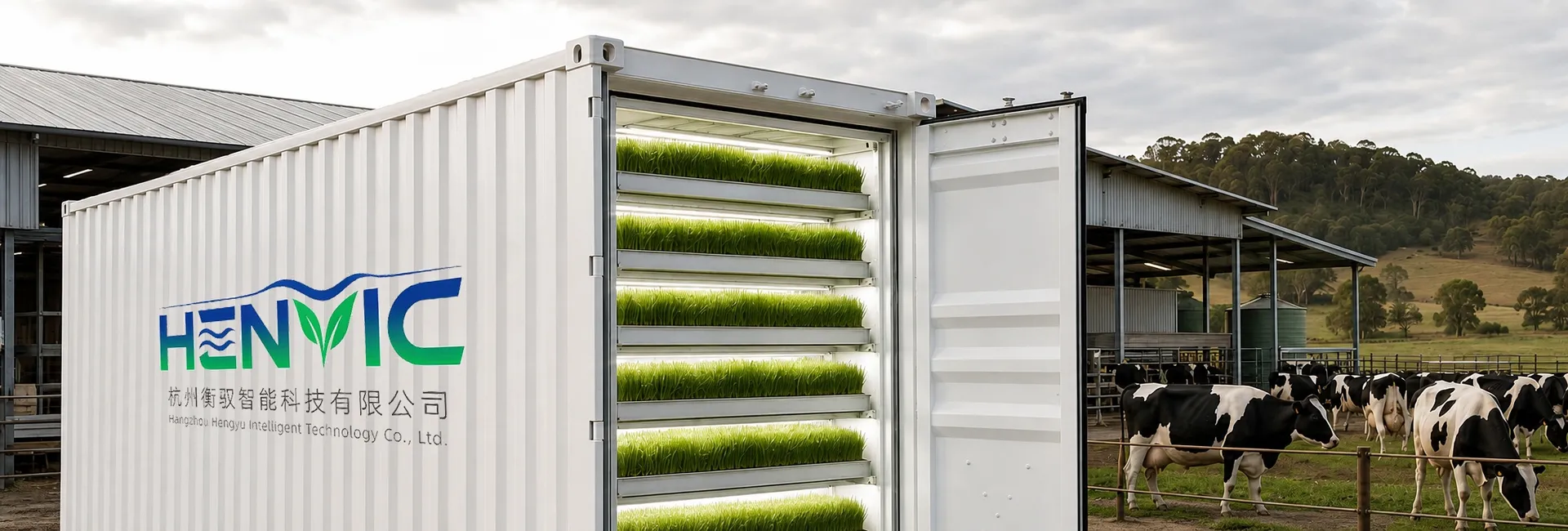
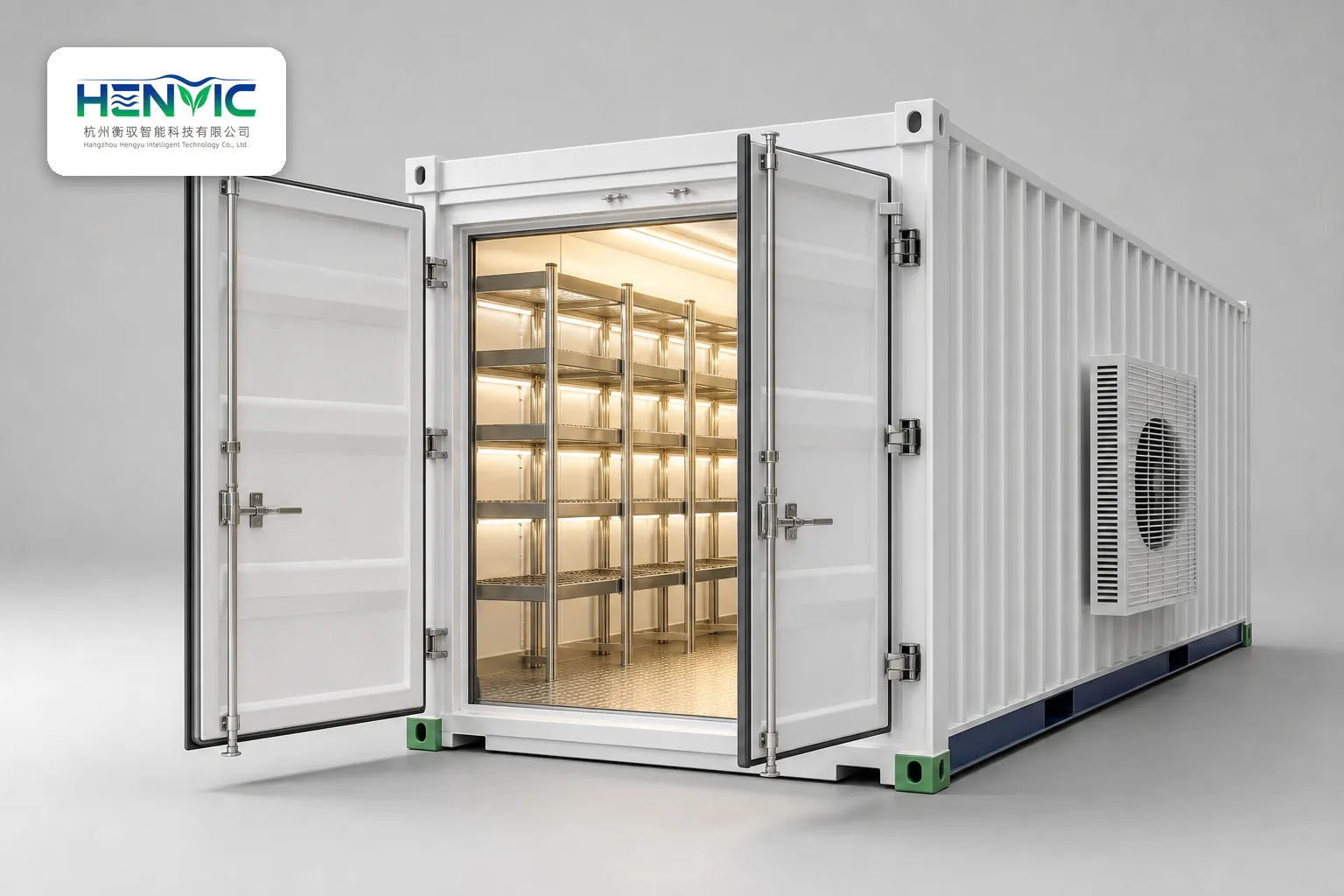
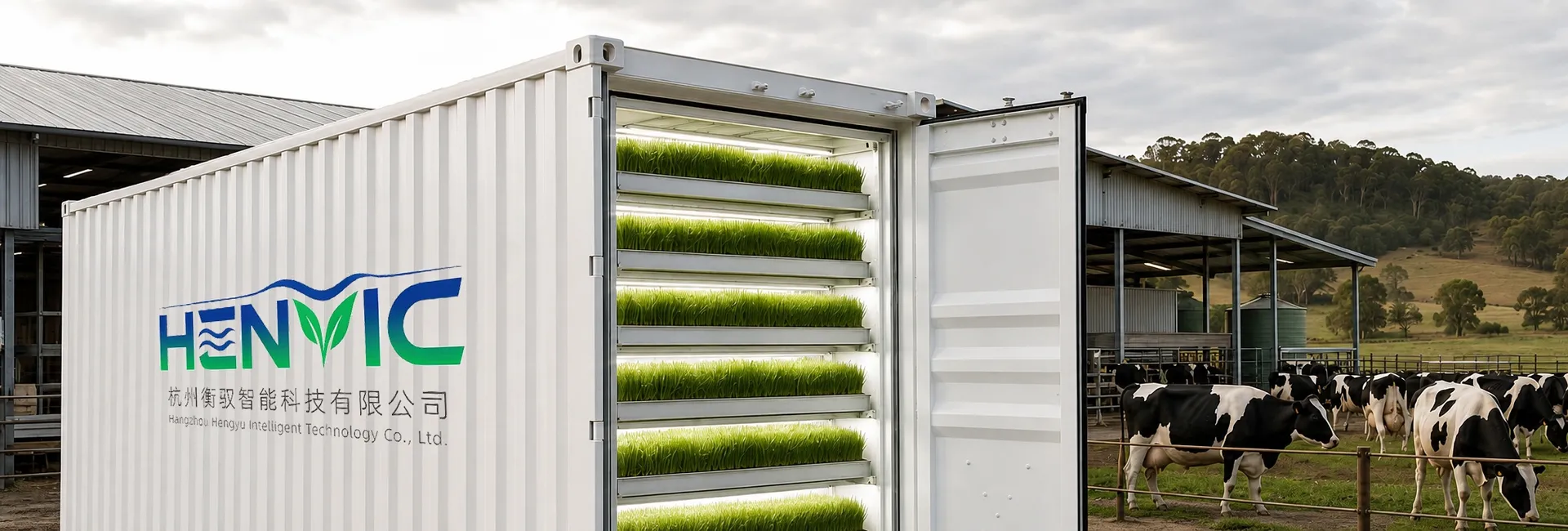
A smart butterhead cabin is therefore a defined engineering object: a sealed, insulated, multi-tier enclosure in which lighting, climate, nutrition and irrigation are generated internally, measured continuously and closed-loop controlled by software, so that a head of lettuce reaches harvest weight on a fixed schedule regardless of season, latitude or rainfall.
2. Why Butterhead Rewards Enclosure
Butterhead's physiology makes it unusually sensitive — in a useful direction — to indoor control.
Short cycle. Seed to harvest typically runs on the order of 35–55 days indoors, so a cabin can be scheduled for eight to ten crop cycles a year, and each cycle is cheap to lose and fast to correct.
High water content, low structural demand. A head is mostly water and thin cell walls. Yield is therefore governed by cell expansion and turgor, which respond directly to humidity and airflow within hours.
Shallow root system. Nutrient film technique (NFT) and deep water culture (DWC) both suit it, eliminating substrate handling and making the root zone a fully instrumented, drainable, chemically accessible loop.
Nitrate physiology. Lettuce accumulates nitrate readily in the leaf vacuole. Because this is controllable by light dose and nitrogen supply, a cabin can be programmed to meet food-safety nitrate limits — something open-field production cannot guarantee.
Tipburn. The classic butterhead defect — necrotic leaf margins — is a calcium-delivery failure, not a calcium-deficiency failure. Calcium moves in the xylem with water, and xylem flow in the inner, enclosed young leaves is driven by transpiration. In a still, humid cabin those leaves never transpire, so calcium never arrives. This single defect explains why serious cabins treat airflow and VPD as primary agronomic variables rather than comfort settings.
3. Architecture
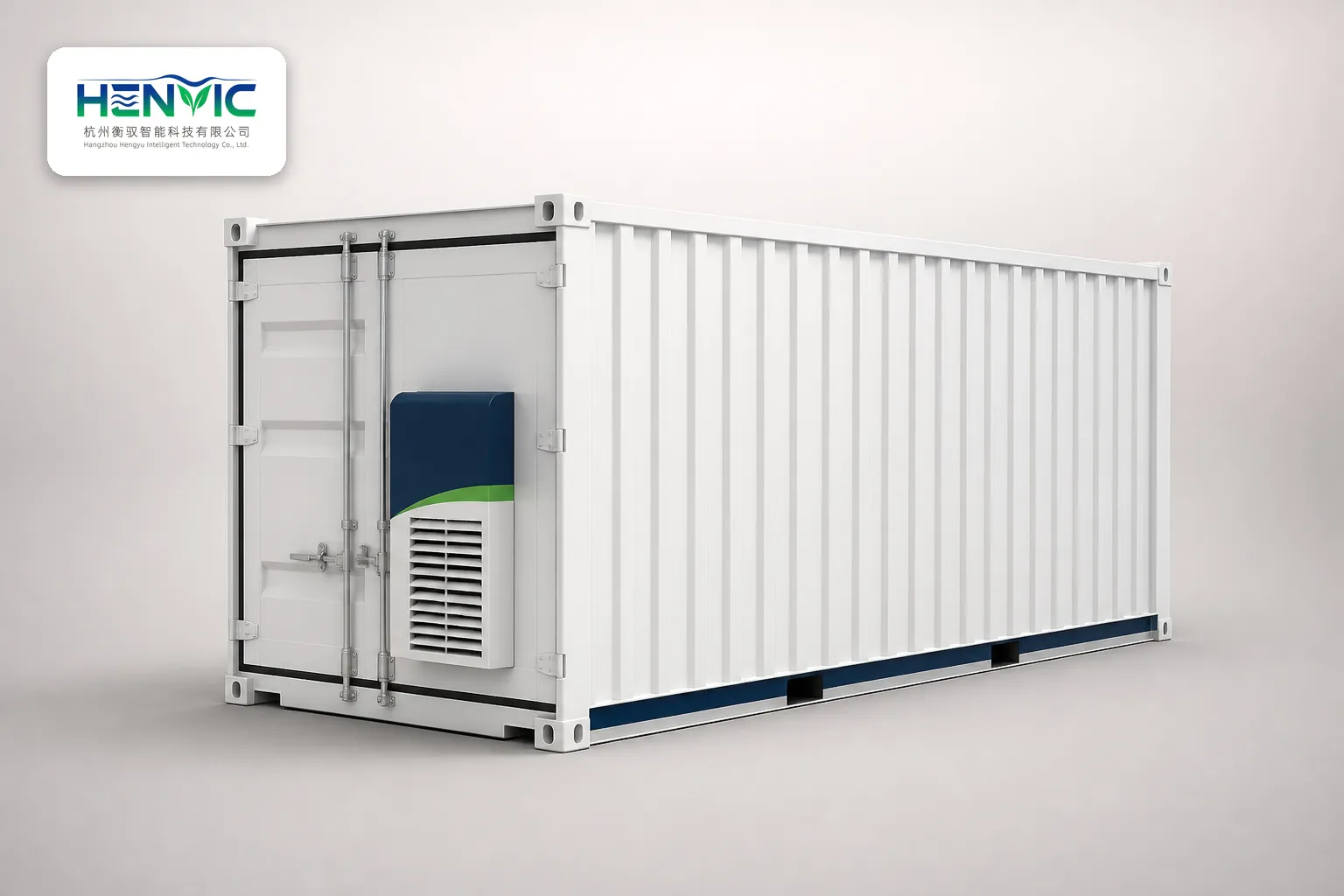
Envelope. Insulated panels with low thermal bridging, sealed against dust and spores, with a people door and a material/biosecurity airlock. Interior surfaces must tolerate continuous condensation and repeated sanitiser exposure.
Lighting. Top-mounted LED bars, typically 150–300 µmol·m⁻²·s⁻¹ PPFD at canopy for butterhead, with daily light integral commonly in the 12–17 mol·m⁻²·d⁻¹ band and photoperiod 16–20 h. Spectrum is a control input, not a fixture choice: blue suppresses elongation and supports anthocyanin and phenolic development, red drives photosynthetic efficiency, and far-red manipulates shade-avoidance — useful for leaf expansion but a bolting and looseness risk if over-supplied. Uniformity across the tray, measured rather than assumed, is the metric that separates a cabin from a lit shelf.
Climate plant. Heat-pump cooling and dehumidification, since a closed canopy transpires continuously and the water has nowhere to go; heating for root-zone and winter load; dehumidification sized at peak transpiration, not at room volume. Air distribution must be low-velocity and non-directed — typically a gentle 0.1–0.3 m/s sweep across the canopy, which is enough to sustain transpiration-driven calcium transport without mechanical damage. CO₂ enrichment in the 800–1,200 ppm range during lit periods is standard practice, and its value scales with light dose: enrichment under low PPFD buys little.
Hydroloopy. NFT channels or DWC rafts, a recirculating nutrient tank, dosing pumps for acid and two/three-part stock, and — the component most often under-specified — a root-zone chiller and oxygenation stage. Lettuce root zones are commonly held near 18–22 °C, pH 5.5–6.5, EC roughly 1.0–1.6 mS/cm, with dissolved oxygen above 5–6 mg/L. Warm, hypoxic solution is the entry point for Pythium, and a cabin that chills only the air will lose crops from below.
Instrumentation and control. Redundant sampling of air temperature, RH, VPD, CO₂, PPFD, solution EC, pH, temperature, level and dissolved oxygen, executed against staged recipes on an edge controller with alarm interlocks and full batch logging. Vision-based canopy monitoring (biomass, head firmness, margin necrosis detection) and model-driven scheduling are increasingly layered on top.
4. The Protocol
Germination in plugs under high humidity and modest light → 12–18 day nursery → transplant onto rafts or into NFT channels → vegetative cropping under a rising light and CO₂ regime with VPD deliberately held in a productive band (commonly 0.4–0.8 kPa) to keep transpiration running → a finishing phase in which nitrogen supply is reduced and light maintained, to draw down nitrate before harvest → harvest, block-out, hot wash and disinfection, then a documented dry-down.
The agronomic insight is that the cabin does not grow lettuce faster than a field does by accident. It grows it to specification, because every variable that determines head mass, colour, crunch, nitrate and defect rate is an input the operator sets.
5. Performance and Economics
Relevant KPIs: heads per m² per year (driven by tier count, cycle time and loss rate), electricity per kilogram, water use relative to field production, defect rate at pack-out, and recipe repeatability between batches.
Recirculating indoor leafy production is genuinely water-light — order-of-magnitude reductions against field agriculture are widely reported — and land productivity per square metre of footprint is high because of vertical stacking. The offsetting cost is that electricity replaces land, weather and labour. Lighting and dehumidification dominate the load, and published intensity figures for indoor leafy greens span a very wide range depending on tier count, photoperiod, climate zone and whether HVAC is allocated to crop volume or floor area. Any business case must therefore be built on measured kWh per kilogram for the specific facility, not on a vendor's headline.
The economically defensible niches are consistent: high-value cultivars and branded baby-leaf lines, urban sites where land and cold-chain cost is high, food-safety-sensitive supply (hospital, infant, export), and locations where field production is seasonally or climatically impossible.
6. Failure Modes
Diagnose along a fixed chain rather than by adjusting set-points empirically.
• Tipburn → VPD too low, airflow absent, calcium transport starved. Raise VPD and add canopy sweep before adding calcium to the tank.
• Bolting / loose heads → photoperiod too long, far-red excess, warm root zone, or heat during the finishing phase.
• Nitrate exceedance → insufficient light dose per unit nitrogen, or no finishing phase.
• Pythium and root browning → root-zone temperature and dissolved oxygen, not nutrient formula.
• Batch-to-batch drift → sensor calibration decay, especially RH and EC; a 0.2 mS/cm EC offset is invisible on a dashboard and obvious in the head.
• Systemic contamination → a sealed cabin converts one infected batch into many; the cleaning and airlock discipline is the real biosecurity control, not the filter.
7. Trajectory
The direction of travel is from fixed set-point tables toward adaptive recipes: computer-vision growth staging that advances or holds a phase, model-predictive lighting that trades energy against target head mass, per-tier airflow engineering for cabins beyond four or five levels, and cluster supervision that treats dozens of cabins as one schedulable factory with redundancy per module. Energy is the constraint that will decide how far this goes; expect the intelligence layer to be judged by kWh per head, not by dashboard features.
8. Specifying One
Ask in order: which cultivar, and is the recipe validated on it? What is measured PPFD uniformity per tier? Is dehumidification sized at peak transpiration? Is the root zone chilled and oxygenated, and is DO instrumented? Is VPD a controlled variable or a derived display? Can the software log, replay and audit a full batch? What happens during a 6-hour power loss? Who owns the recipe data? A cabin that cannot answer these is a lit box with a pump.
Evidentiary note. Cycle times, PPFD/DLI, VPD, EC, pH, root temperature, DO and CO₂ ranges above are general controlled-environment and hydroponic practice for leafy lettuce, offered as typical design bands rather than audited site data; they shift with cultivar, climate and fixture, and must be established experimentally per cabin. Energy and water performance are cited only as directional statements, since published values vary too widely for a single figure to be meaningful. No specific deployment, yield or cost claim is asserted here.
Saved as Butterhead-Lettuce-Smart-Grow-Cabin.md (~1,450 words, eight sections) in the artifact panel for download or re-typesetting.